
Keynotes
Anna Meroni
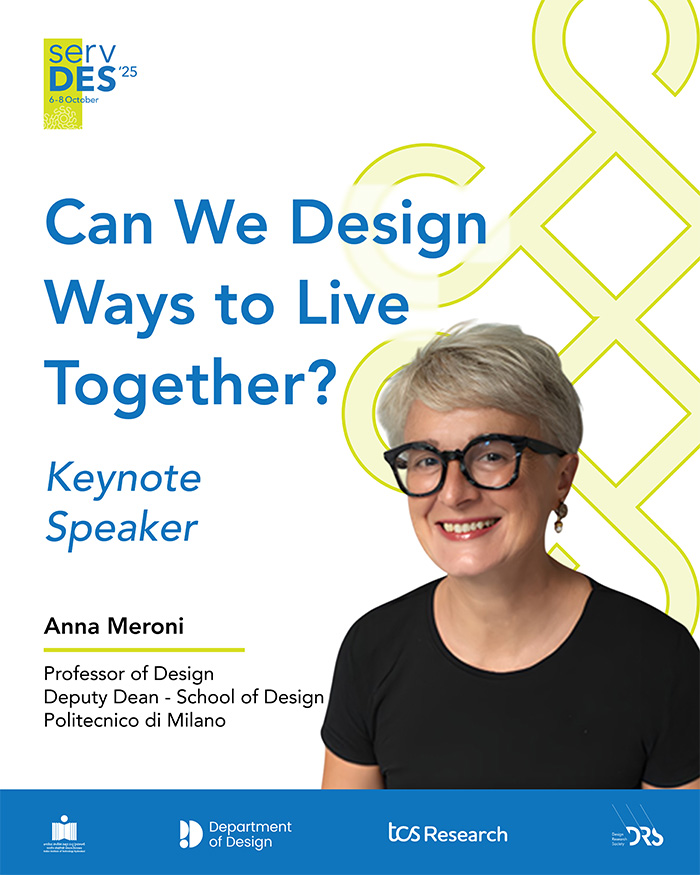
Can We Design Ways to Live Together?
Brief Bio:
Anna Meroni, PhD, is a Full Professor of Design and, since 2022, has been serving as Deputy Dean of the School of Design at Politecnico di Milano. In 2025, she was elected to the Executive Board of the CUMULUS Association — the Global Association of Art and Design Education and Research. She is among the founders of the DESIS Lab at Politecnico di Milano and the DESIS Network Association — Design for Social Innovation and Sustainability, and she currently acts as an honorary member of its International Coordination Committee. Her research focus is service and strategic design for sustainability to foster place development, social innovation, and participation. She has developed a specific expertise in co-design strategies, methods and tools and pioneered the concept of community-centered design, working across diverse areas such as social entrepreneurship, placemaking, urban commons, collaborative living and sustainable food systems.
Yoko Akama

Design Readiness in Uncertain Futures
Brief Bio:
Yoko Akama is a design researcher and educator in the School of Design at RMIT University, on the unceded lands of Narrm, Kulin Nations (now known as Melbourne, Australia). Yoko’s upbringing, education, and employment across Australia, the UK, the US, and Japan have grounded a practice committed to enhancing qualities of inter-relating, embracing difference, and fostering cultural sensitivity to deeply engage with complexity. Her work spans a range of contexts, including enabling adaptive capacities for regional communities to prepare for natural disasters; supporting Indigenous sovereignty and co-designing for resilience; mentoring transcultural women in the creative sectors; and scaffolding relational ways of being. These collaborative efforts have been published in several books: Uncertainty and Possibility (2018); Modes of Uncertainty in HCI (2022); and Entanglements of Designing Social Innovation in the Asia-Pacific (2023). Yoko is also the co-founder of the Designing Entangled Social Innovation in Asia-Pacific learning platform (http://desiap.org).
Vivek Sawant
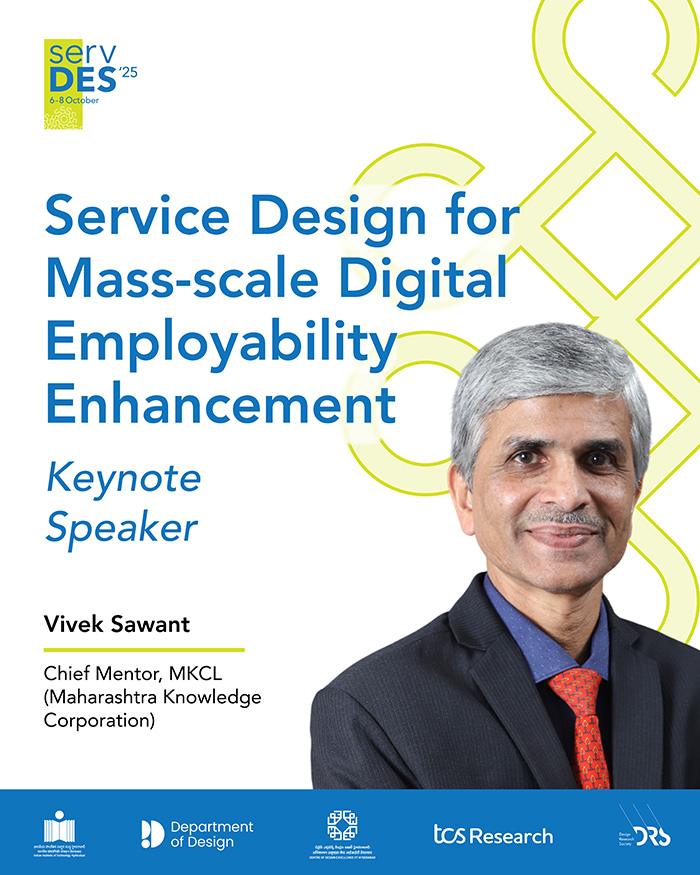
Service Design for Mass-scale Digital Employability Enhancement
Brief Bio:
Vivek Sawant is the Chief Mentor of Maharashtra Knowledge Corporation Limited (MKCL) established by the Government of Maharashtra in 2001 to bridge the digital divide faced by the common people, and to offer them digital empowerment opportunities. He served as the Managing Director of MKCL from its inception for 18 consecutive years until the end of 2019. Through MKCL, Shri Sawant launched a statewide campaign to promote Information Technology (IT)literacy. Through MKCL, he established a robust network of over 6,000 Authorized Learning Centers (ALCs) equipped with more than 75,000+ internet-ready computers. This network of ALCs is one of the largest private-public-community-partnership networks in the world. Under his leadership, a unique high-tech social business opportunity has been created and sustained for these 6,000+ small IT training enterprises and job opportunity for 25,000+ IT Trainers at these ALCs. Recognizing the success of this model created by Sawant, several state governments—including Rajasthan, Odisha, Haryana, Bihar, Kerala, Himachal Pradesh, and Tripura replicated it under the knowledge partnership of MKCL. Before the establishment of MKCL, Shri Sawant contributed 12 years (1988–2000) to advanced computing research and development at C-DAC (Centre for Development of Advanced Computing). He played a crucial role in creating India’s first indigenous supercomputer, Param, following the U.S. embargo on India for access to supercomputing technology. This success instilled immense confidence in Indian youth. Shri Sawant also founded the Advanced Computing Training School (ACTS) of C-DAC, expanded it in 20 cities nationwide, and trained 25,000 advanced computing engineers in the 1990s. Sawant has received numerous prestigious awards for his significant contributions in fields of education, IT and IT Enabled Education, digital skill development for employability enhancement, IT research, innovation, entrepreneurship, social responsibility, management, and leadership.
Alison Prendiville

Bridging the global healthcare divide: the development of a community-based test for Urinary Tract Infections (UTIs) in Northeast India.
Professor Alison Prendiville is internationally recognized for her systemic service design research. Her work is highly collaborative and relational, engaging with health and social care professionals as well as communities to account for and integrate local knowledge with technology. This integration supports the development of new products, services, and policies aimed at addressing societal challenges such as Antimicrobial Resistance (AMR). Her research is transdisciplinary, where her use of human-centred and place-based co-design methods connects practices, technologies, and policies to support healthcare transformation. Currently, she is working on the DOSA (Diagnostics for a One Health User-Driven Solution to AMR) project in collaboration with partners from the UK and India.This initiative is focusing on the development of a simple, community-based diagnostic test and service for urinary tract infections (UTIs) as part of the global agenda to combat AMR. Additionally, she is contributing to an NIHR-funded project, co-designing solutions to improve the blood culture pathway in three NHS hospitals for improved patient safety and antibiotic stewardship. Her previous AMR-related work includes collaborating with nurses in the UK to reimagine nursing practices in response to AMR challenges in human health. In India, her design research has extended to poultry, dairy and aquaculture farming to better understand the entangled structural nature of antibiotic use across supply chains. Alison has a keen interest in exploring how design can serve as a medium for co-creating and translating different forms of knowledge among diverse stakeholders, especially when addressing nested societal challenges. Her work draws on service
design and anthropology to analyse and amplify the role of culture in human and animal healthcare setting, enabling the delivery of meaningful and socially responsive service interventions.
Ashok Pal Singh
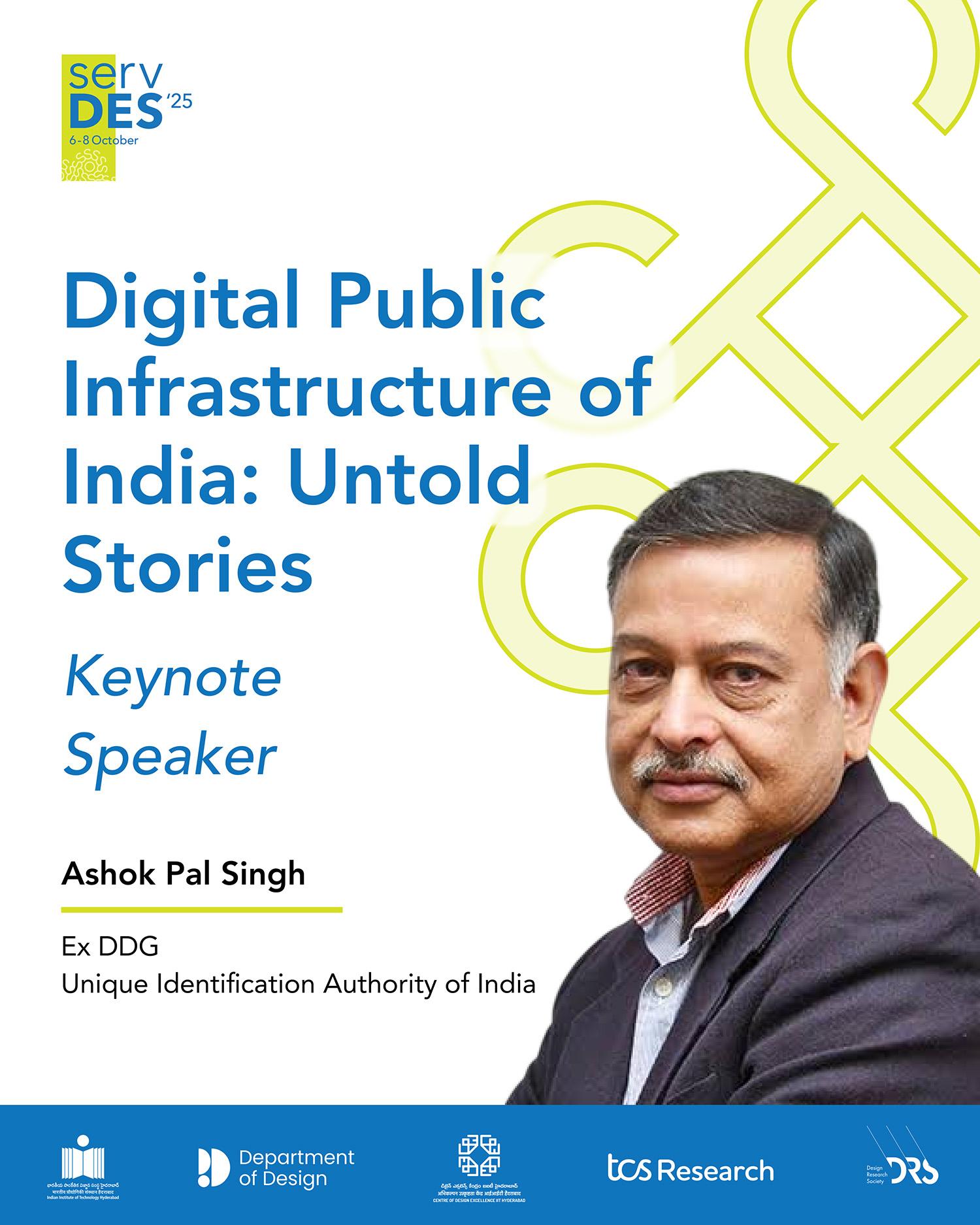
Ashok Pal Singh is a former civil servant with over 35 years of work experience. He has been a Member of the Postal Services Board, the founding Managing Director and Chief Executive Officer of the India Post Payments Bank, Joint Secretary to the Government of India in the Ministry of Finance and Deputy Director General in the Unique Identification Authority of India.
Mr Singh is associated with several public-sector reforms including:
- Design of Aadhaar as the payment address of the individual
- Design of the Direct Benefit Transfer program of the Government of India for disbursement of social security benefits using biometric identity and bank accounts
- Networking of the Post Office to deliver electronic mail, banking and insurance services
- Redesign of the Reproductive and Child Health program of India
- Introduction of the National Child Help Line of India for emergency help to children in need
- Design of the National Pension Scheme (NPS) which moved India from a defined benefit to a defined contribution regime
- Opening of telecommunications in India to competition and private sector
Mr Singh supports street children and writes on public policy. Awarded the Chevening Gurukul Scholarship for Leadership and Excellence in 2014, Mr Singh obtained a Master’s in public administration from the Maxwell School of Citizenship and Public Affairs, Syracuse University, USA, a Master’s in history from St. Stephens College, University of Delhi and participated in a course on Creating Collaborative Solutions:Innovations in Governance at the Harvard Kennedy School.
Jayesh Ranjan
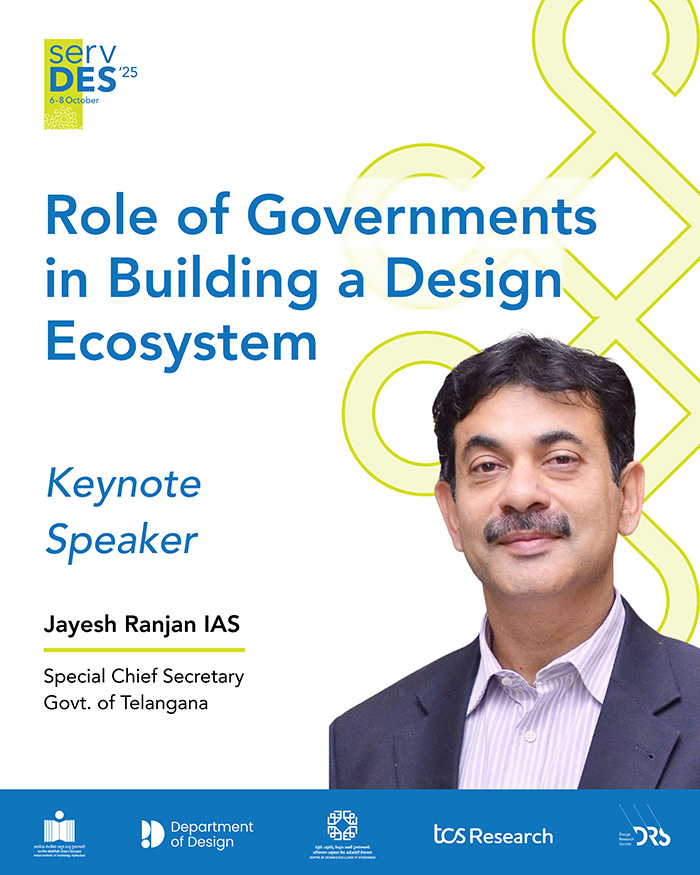
Jayesh Ranjan is a member of the Indian Administrative Service (IAS) of the 1992 batch and working in the state of Telangana. He is the Special Chief Secretary to Government, Youth Advancement, Tourism, Culture & Sports Department & Chief Executive Officer, Industry & Investment Cell, Smart Proactive Efficient and Effective Delivery (SPEED) in Chief Ministers Office.
His assignment involves developing policy frameworks, attracting new investments, identifying opportunities of utilizing IT in various government processes, and promoting digital empowerment of the citizens. His last few assignments have been in the Industrial Promotion sector as Commissioner and MD of the Industries Department, Secretary in the Tourism Promotion Department, and Vice-Chairman of the Hyderabad Urban Development Authority (HUDA), all for 2-3 years each, and various rural assignments in different parts of the state for over 12 years, working in diverse sectors like Tribal Development, Natural Resources Management, Poverty Alleviation and other related Social Development Sectors.He supports many social, cultural and charitable causes, and is on the Boards/Advisory committees of Several trusts and foundations serving human causes.
He is a part of the National Pool of Trainers in Leadership constituted by the Government of India, and is involved in training and mentoring newly recruited Civil Servants. Among his other distinctions, he was awarded the Royal Order of the Polar Star by His Majesty The King of Sweden in 2019 for promoting Swedish business interests in India including opening of IKEA’s first Indian store in Hyderabad.



Contact us: servdes2025@des.iith.ac.in
Copyright © 2025 Department of Design, Indian Institute of Technology Hyderabad. All rights reserved.